Thought Experiment
The Philosophy of Why We Do What We Do

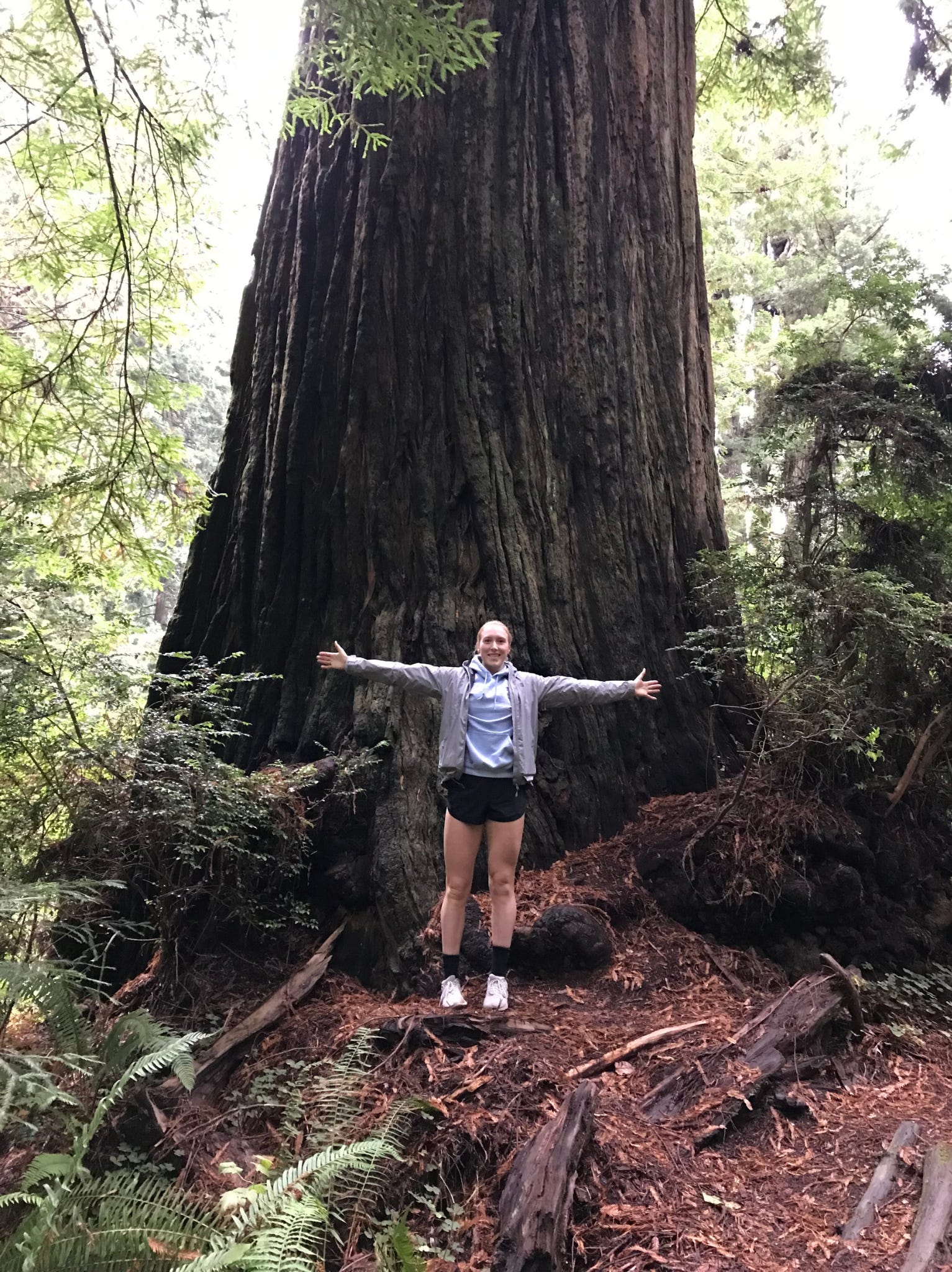
If a tree falls in the middle of a forest when no one is around, does it make a sound?
Before my time on the National Team, my answer would’ve been an emphatic no.
It’s simple science. A falling tree will disrupt the surrounding air, reverberating energy that dissipates from the source. Cracked branches, disturbed soil, and a once proud canopy collapsed onto the forest floor, serving as indisputable evidence of physical disruption. However evident the aftermath may be, sound, according to the professionals, is more than vibrating particles. Mechanical energy must be transduced into electrochemical signals in the auditory system. In people, perception results from that stimulation being translated into neuronal signaling, which is then registered through higher level processing as a conscious experience. Without transduction, experience doesn’t register, the biological version of “pics or it didn’t happen”.
But now I hear things a bit differently.
If you asked me 3 years ago why I was doing what I was doing, the answer would be simple: to go to the Olympics.
I thought that’s why anyone becomes devoted to a craft, bordering on obsession, to reach the highest level. What the Olympics signified was more than a competition; they were proof of value. My absence from important events or ‘normal’ life milestones wasn’t a loss but a justification. I put in the work and would have a result to show for it.
But I didn’t go to the Olympics.
I trained just as many hours as Olympians, but didn’t quite make the club. I persevered through mind-altering sessions, but didn’t win an award for their completion. I travelled for training camps and competitions, but didn’t get a ticket to where I wanted to end up. I directed every decision I made toward a specific goal that I didn’t achieve.
Most of this work was done in private: in the middle of a lake, alone in an erg room, or in spaces accessible only to a few. No one witnessed me bury myself in an effort to win a fraction of a second, or alternate between a stationary bike and an erg for three hours straight. No one saw those tough conversations I had with my coaches about missing the mark.
So did it happen?
My strides in physiology, which make me so proud of everything the human body is capable of, say it did. The skill I have only exists through the accumulation of all these moments, and the mental fortitude learned by each decision to continue.
No one perceived it had happened, but no one is going to argue a collapsed tree simply grew that way, even if they didn’t witness the fall. I may not have a profile picture posing in front of the Olympic rings as proof, but I am left with a fierce work ethic and a delusion that anything might actually be possible.
If we only act to be heard, what will happen when no one is around for the fall?
Now my answer to this simple question is much more nuanced.
Because it’s not about whether the tree makes a sound, but how much it can disrupt without an audience to validate its existence.
Is there something you’re doing for the noise? Or holding yourself back because you think no one will hear it?